5 Tips for Meeting Construction Project Deadlines
Missed deadlines cost more than money. They cost trust. Here are five practical habits contractors use to keep projects on schedule.
Article written by
KonstructIQ
Nearly every delayed construction project traces back to one of a few root causes: poor communication, no buffer for the unexpected, overcommitting, or scattered processes. Here's how experienced contractors avoid all four.
Keep the Property Owner in the Loop
Weekly or biweekly updates, even short ones, prevent scope creep and catch misunderstandings before they cost time. Clients who feel informed are far less likely to request last-minute changes that push back a deadline.
Set Explicit Expectations with Subcontractors
Every sub on the job should know exactly what's expected, by when, and to what standard. Regular coordination meetings, even 15 minutes, surface scheduling conflicts before they become delays.
Build the Schedule with Flexibility from Day One
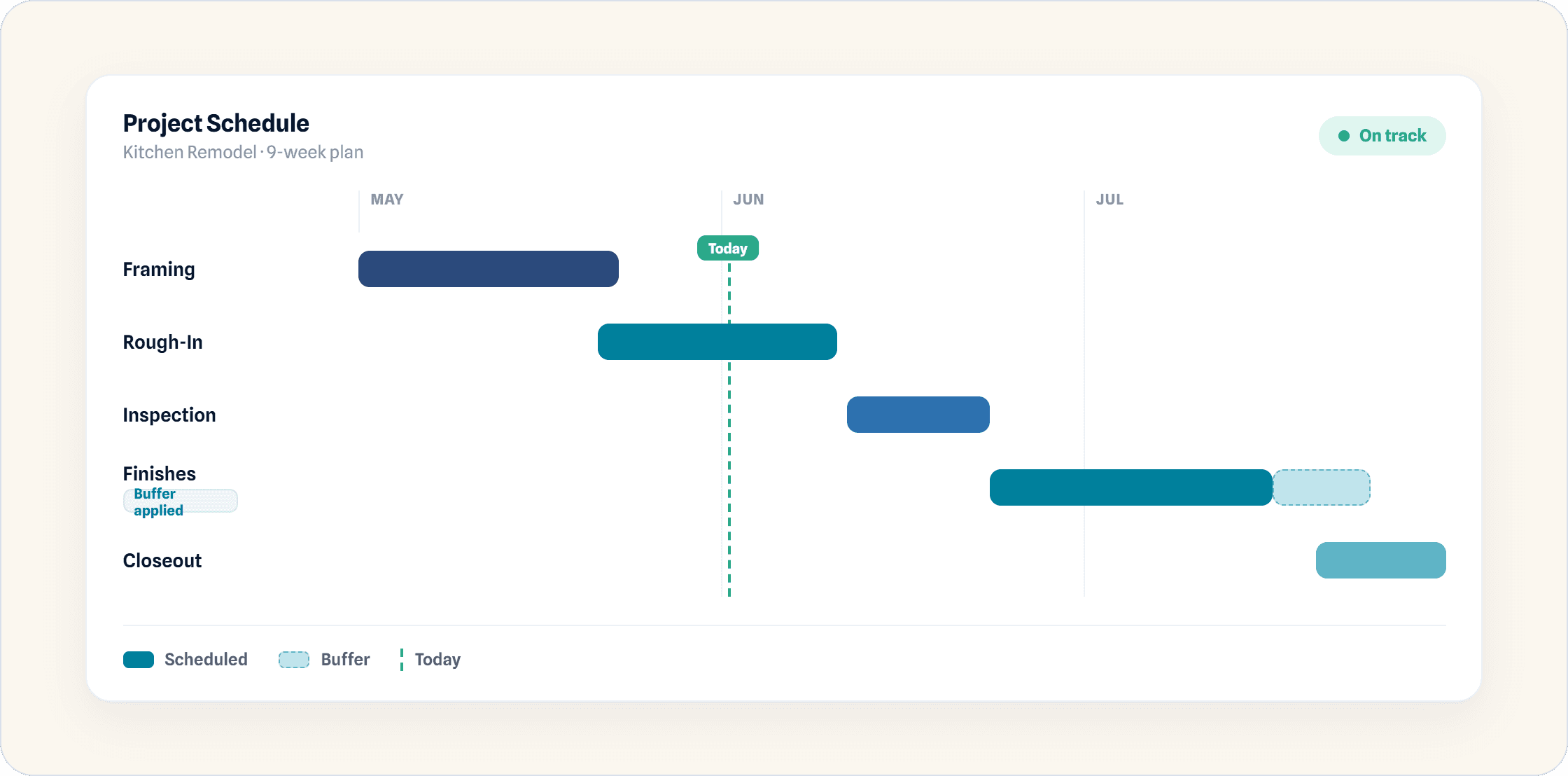
Projects that hit their deadlines are the ones that planned for weather, permitting, and supply delays from the start, not the ones that hoped nothing would go wrong. Build buffer time into the schedule the same way you'd build a contingency line into the budget.
Don't Take on More Than You Can Deliver
Deadlines slip most often when a contractor is stretched across too many active projects. An honest audit of crew capacity and current workload before accepting a new job is one of the simplest ways to protect every deadline you've already committed to.
Centralize Your Process in One Platform
Estimates, change orders, payments, and schedules living across five different tools, or a stack of paper, is where deadlines quietly slip through the cracks. KonstructIQ centralizes the entire project lifecycle, from first estimate to final payment, so nothing falls through.

None of these five tips work in isolation. Communication, planning, discipline, and the right tools reinforce each other. Miss one, and the others carry more weight than they should.
See also: handling last-minute change orders and keeping strong relationships with subcontractors.